The New Business Book Playbook:
Why $100 Books, Non-Obvious AI Bundles, and Category Design Are Creating a New Standard
For authors, founders, and subject matter experts who know the old model no longer works.
This BLOG is another love letter to Founders who want to write their OWN BOOK, become subject matter experts Without relying on the Old Model that no longer works.
There are robbers in your house!
WAKE UP!
They are stealing your money and life’s work!
But there are two bits of good news. The first is that we know all 5 of the gang, their names are...
HarperCollins
Simon & Schuster
Macmillan Publishers
Hachette Book Group
Penguin Random House
These 5 also are placeholder for your local publishers.. for they all follow the exact Playbook.
The second bit of good news is they didn’t take all your money.
They left you about 5-10%.
Below is a chart that shows the percent of revenue that creators take home from major publishing platforms. We put the platforms we renegades approve of in hot pink.
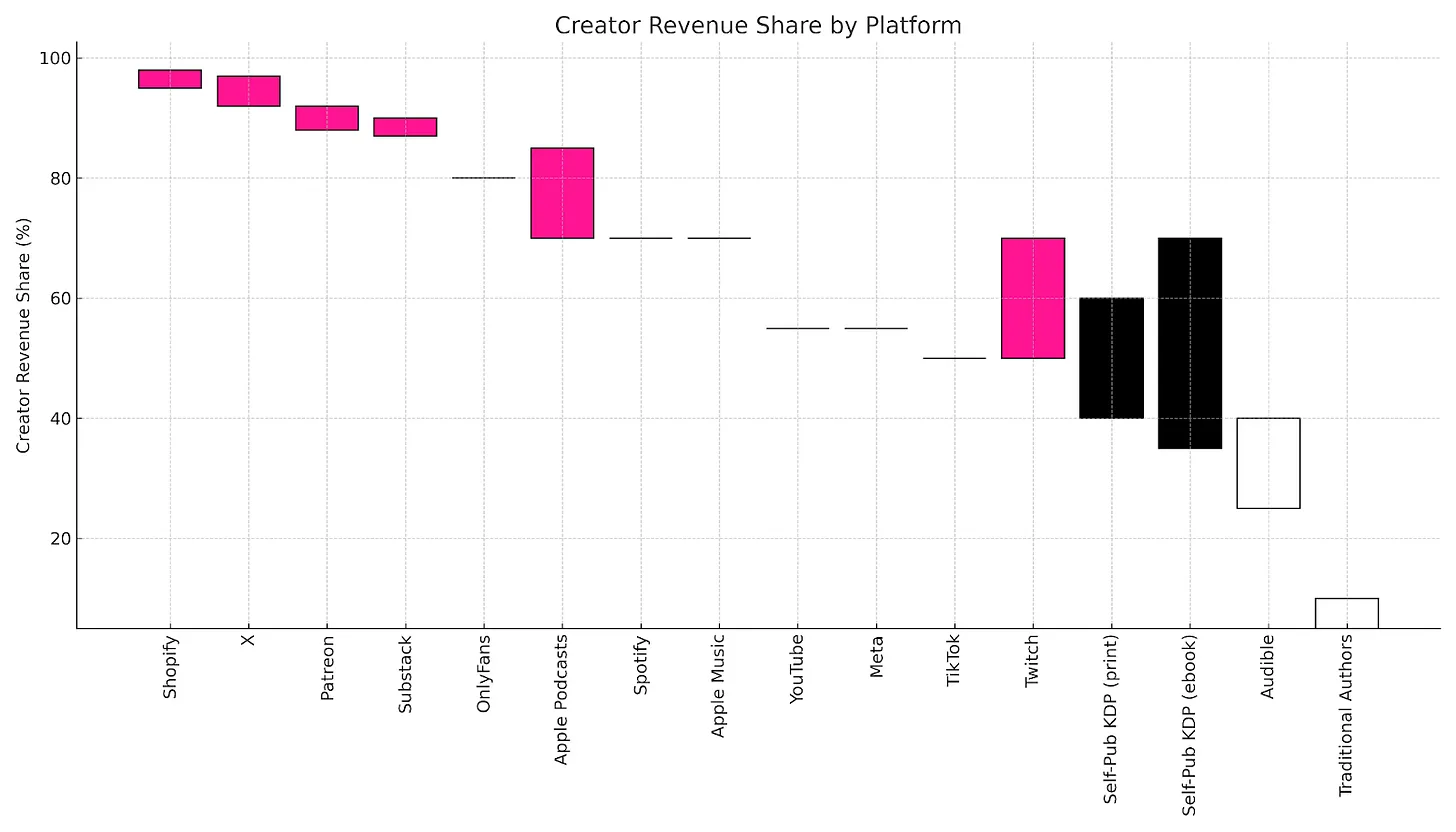
Shopify, X, Patreon, Substack, and OnlyFans share 80% or more of revenue with creators.
Bravo!
The original social media crew (YouTube, Meta, etc.) gives between 50% to 80% of revenue, which is still pretty good.
AND Amazon’s self-publishing is way better than traditional publishing. But Amazon’s incentive structure is to give you a higher royalty if you price your books lower. Boo to Amazon. They are not as bad as the publishing gang of five, but Amazon is more like the local mafia dude who offers to protect you from the gangsters in exchange for protection money.
We reserve a special place for Audible (or Audacity, as we like to call them).
It’s a digital-first platform with awesome marginal costs and unit economics, just like their digital brothers and sisters. But they’ve chosen to steal money just like the OG traditional publisher crew by taking 60% to 75% of creator revenue for themselves!

Has Got To Go!
Savvy Players are designing a new book category that is WORTH $100 at the low end. One where Authors take at least 50% of revenue. One that could exponentially increase the total pie for everyone.
We’re calling this new book category Transformational Books (versus Reading Books).
More on this to come.
The good news is, we’re not alone.
Folks like Paul Millerd, author of The Pathless Path, Joana Weibe, Donald Miller author of storybrand, are blazing the trail with this approach
Why The Pathless Path Is Worth $100-$500 Per Book
When Paul clicked into a ZOOM call with Penguin Random House, he was ready to jam on ideas for his book.
Instead, he sat through a rushed, overly confident pitch from a team that behaved as if the future of his book had already been decided. After brief introductions, the senior publisher and lead editor outlined their plan. They wanted to “take The Pathless Path to more people.”
The first step would be to take his book out of print, redesign the cover, and update the content.
Paul couldn’t hide his confusion.
Readers were buying the book in real time. He was selling thousands of copies a month.
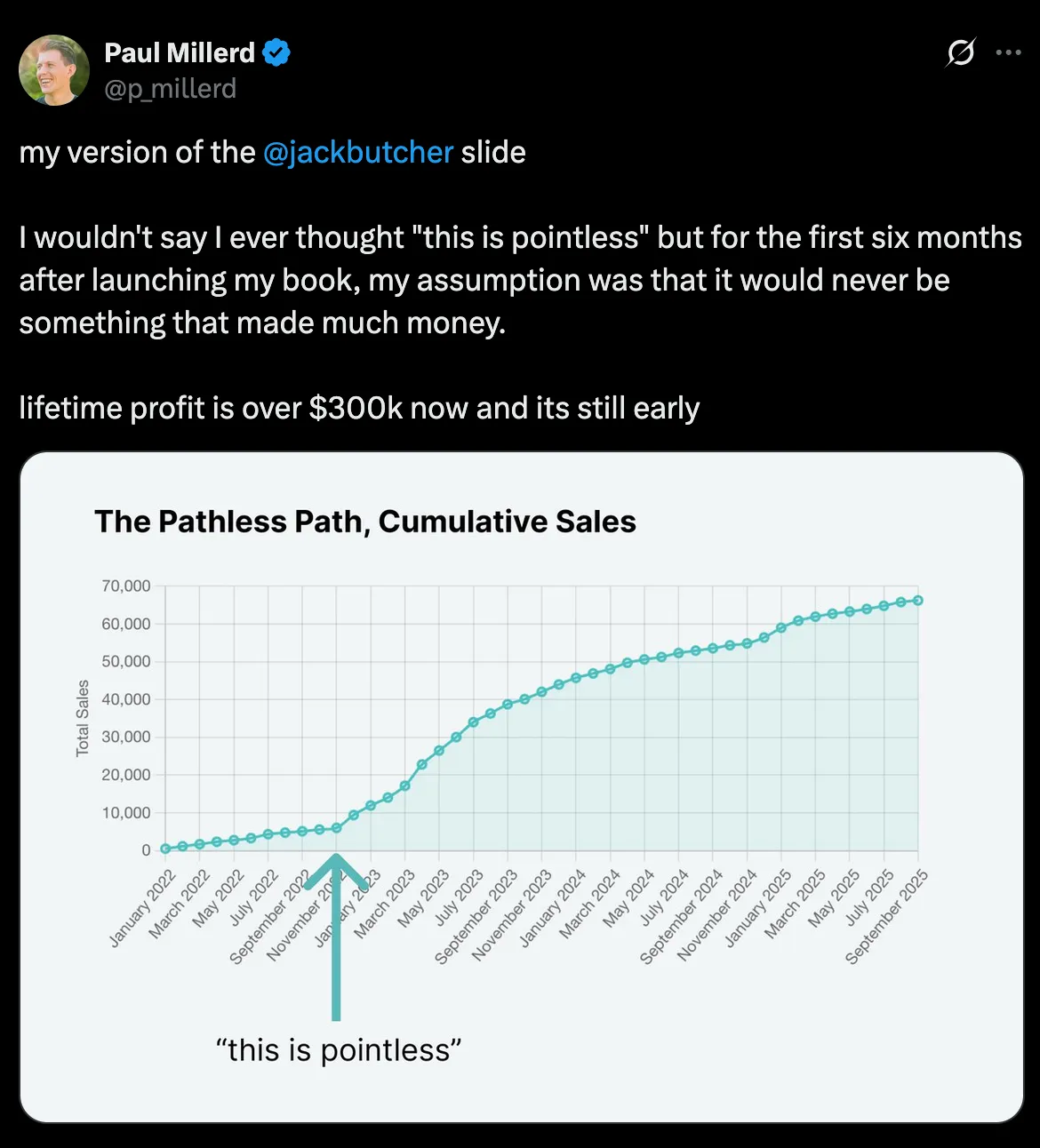
The cover had become recognizable in his community. People were sending him messages about how much the book meant to them.
Nothing about the publisher’s proposal made sense.
He tried to understand the strategy.
They said they had better distribution.
That he would struggle as a self-published author.
They could get his book into markets he couldn’t reach alone.
They could send preview copies to big-name authors they knew well.
Paul joked that “nothing was stopping them from sharing the book now if they believed in it that much.” The joke didn’t land. The temperature of the conversation changed the moment he showed a hint of skepticism.
Still, he pressed.
He asked what ideas they had related to the book’s themes.
What he heard back was a set of generic marketing tactics that could have applied to almost any book on their list. There was nothing about unconventional careers, nothing about life design, nothing about the inner journey that had made The Pathless Path resonate with thousands of readers.
Finally, they delivered the offer:
$70,000 in exchange for lifetime rights, plus 70 years after his death.
Paul closed his laptop and declared, “I’m definitely not doing the deal.”
But instead of panic, he felt clarity. Instead of doubt, he felt conviction. Instead of worrying he had just made a reckless decision, he felt the unmistakable sense that he had narrowly escaped something that would have taken the soul out of his work.
Over the next few days, he kept returning to the same realisation...
wasn’t built for creators.
It would never care about his book the way he cared.
It couldn’t sustain the level of attention, craft, and intention he wanted to pour into the work. It couldn’t match the momentum already coming from readers. And it couldn’t justify taking ownership of the thing he cared about most.
Paul realized his book was a hit, and he hadn’t even begun to explore how far he could take it.
So, he made a decision.
He would create the book he wished existed. He would choose craft over compliance, agency over approval, and creativity over compromise. He would make something beautiful and worthy of the ideas he cared about.
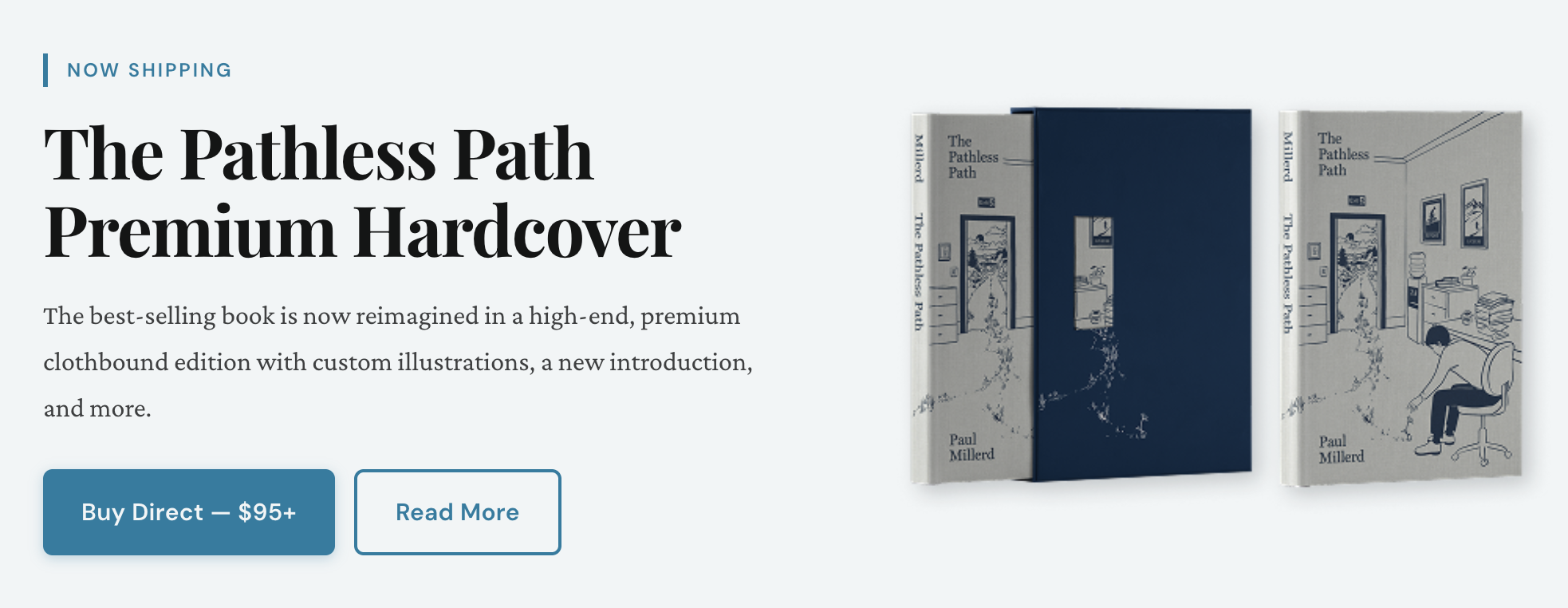
The result was a $95 Italian-printed, slipcased, art-forward collector’s edition of The Pathless Path that sold 250 copies in two weeks and shipped to 22 countries.
He invested real money and trusted his creative instincts. He built something no publisher would have ever approved. And he discovered he had a niche which didn’t want a cheaper book, but a more meaningful one.
Publishing is an OUTDATED System that extracts upside from those who create it. When you zoom out, you start to see the pattern. Authors are playing a game they didn’t design, with rules that were never written in their favor.
That’s what this blog is here to expose...
Why publishing economics are fundamentally misaligned, and how you can redesign them in your favor
How the default publishing model puts authors in the “Be the Winner” and “Be the Best” traps
How to join the new publishing category that’s emerging for authors, business owners and subject matter experts who choose to “Be Different” and want to own their economics, craft, and future
Rigged Against Authors
Every author enters the publishing world believing they’re choosing between “self-publishing” and “traditional publishing.”
They’re not.
What they’re actually choosing between is:
A legacy system optimized for publishers, not creators
A worldview that treats books as commodities instead of creative assets
A pricing psychology built for a 1960s supply chain instead of a 2020s digital economy
Most authors don’t realize this because the industry wraps its incentives in a warm blanket of prestige, credibility, and “we know best.” But once you look a little closer, the publishing industry’s CORE Design (to reap you off..till kingdom come) reveals itself in full.
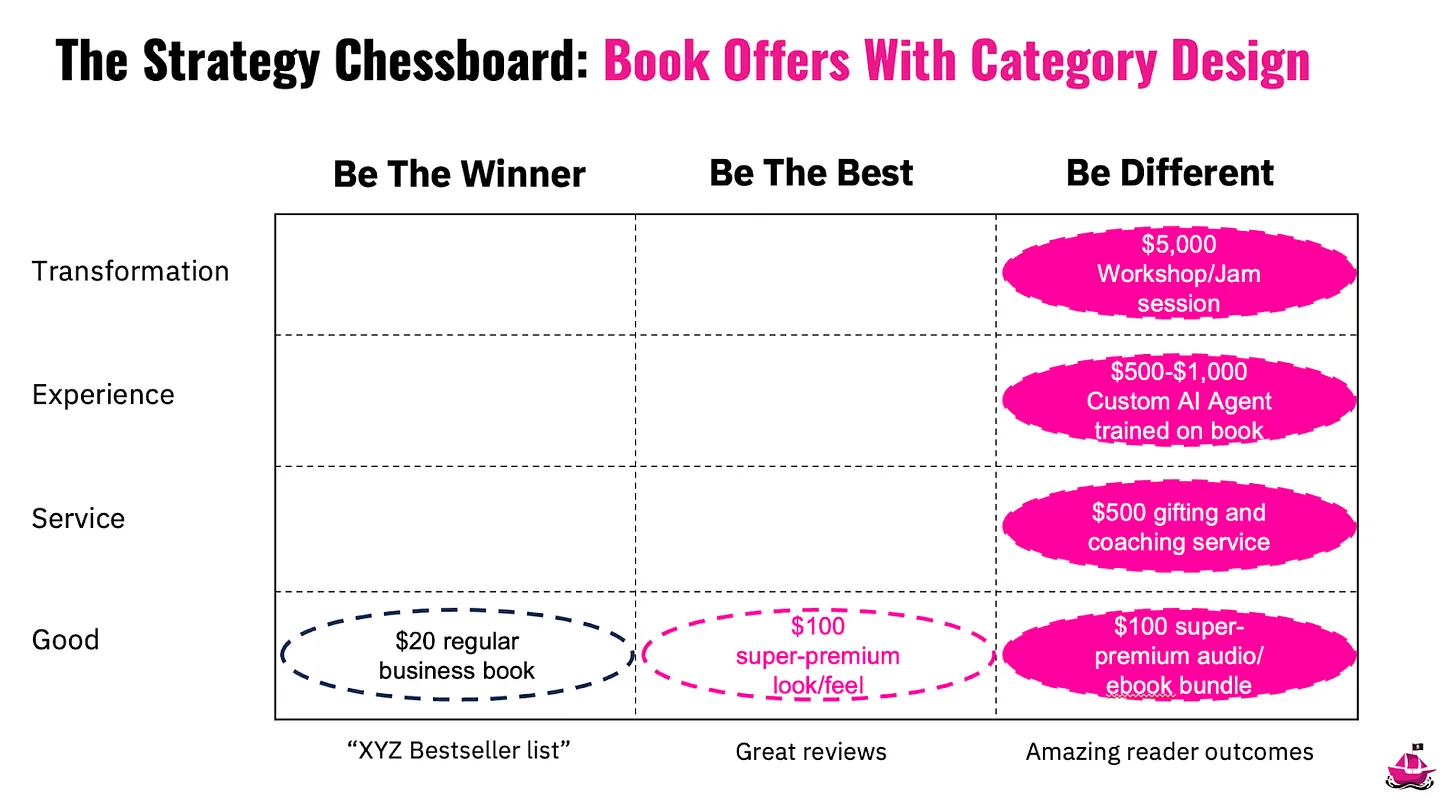
This is the default for 95% of authors today.
But it’s the most psychologically seductive trap of all. You publish with a legacy publisher or on Amazon. You optimize for keywords, categories, metadata, and algorithms. You play the ranking game. You chase volume. You measure success by charts, badges, and the dopamine hit of “#1 Bestseller” (a label given out more freely than discount tickets).
You discount.
You discount again.
You end up in the [$0.99 -$10.99] bargain bin. You get there even faster thanks to Audible’s $0.99 promotion that you can’t control!
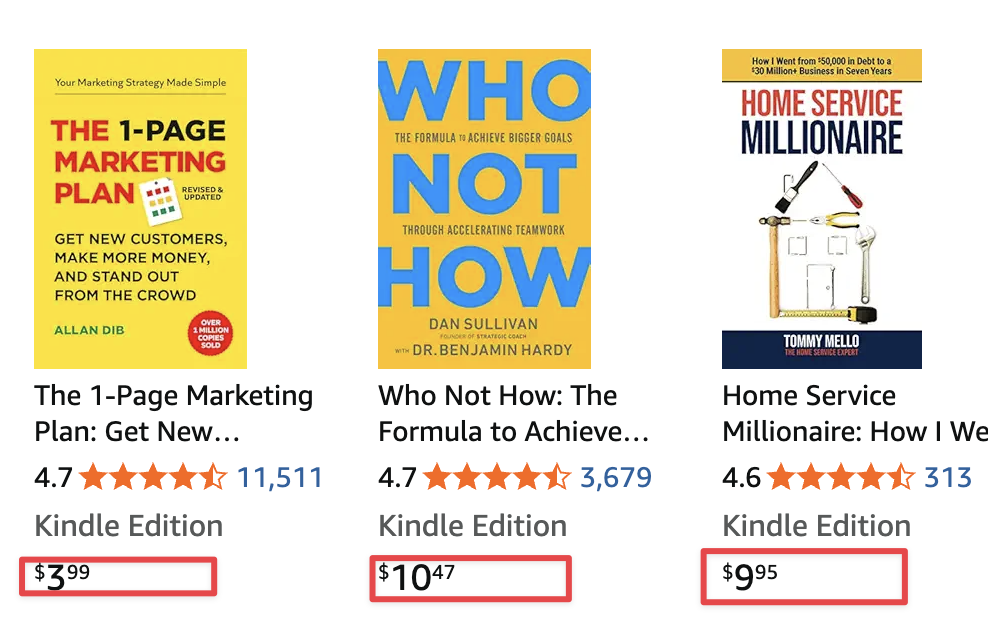
The only winner in “Be The Winner” is the publisher.
This is the trap Paul could have fallen into on the call with Penguin Random House. The publisher promises credibility, distribution, and a way to make your book “big.”
Prestige has a price, and publishers know most authors will pay it.
The price is control.
The price is ownership.
The price is your creative autonomy.
The publisher captures the economics, controls the distribution, and decides what readers see. The publisher, not you, becomes the customer’s point of loyalty. You become indistinguishable from every other author shouting into the same digital aisle.
Worst of all... You are competing in a race to the BOTTOM, where the bottom has no floor.
What’s Really GOING On Here?
At its core, the publishing ecosystem is structured to profit off authors. Most systems, strategies, and models are designed to make you the prey in a highly competitive, zero-sum game.
If you’re done playing by the old publishing rules, book a CLARITY CALL. We’ll walk through how you can design a demand-driven book system AND what support (guidance, execution, or both) makes sense for you.